

Against the backdrop of global energy transformation and the "dual carbon" goal, household electricity consumption scenarios are undergoing profound changes. The traditional power grid power supply model faces challenges such as peak-valley price differences, extreme weather power outage risks, and renewable energy consumption. As a key carrier that connects user electricity demand and energy supply, the household energy storage system is gradually entering the public eye. It is not only a practical solution to solve the pain points of household electricity consumption, but also an important link in promoting the upgrading of energy consumption patterns. This article will discuss the core functions, technical principles, industry value, and selection points of the household energy storage system, and answer common user questions to provide a systematic reference for household energy management.
The core value and core composition of the household energy storage system
The household energy storage system is an integrated solution for the storage, management, and distribution of electrical energy through battery energy storage technology. It is mainly composed of core components such as battery packs, energy management systems (EMS), and inverters. Its core value lies in breaking the time and space limitations of traditional electricity consumption, allowing household users to transform from "passive electricity consumption" to "active electricity management." For ordinary families, it can not only deal with the peak-valley price difference of daily electricity consumption and reduce electricity costs, but also provide emergency power supply during power outages to ensure basic living needs. More importantly, with the popularization of distributed energy such as solar energy and wind energy, home energy storage systems have become a bridge between renewable energy and household electricity consumption, promoting the efficient use of green energy in terminal consumption scenarios. This article will focus on the functional advantages, technical principles, application scenarios and selection recommendations of home energy storage systems to help users fully understand this emerging home energy management solution.
Main functions and core advantages of home energy storage systems
1. Peak shaving and valley filling to reduce electricity costs
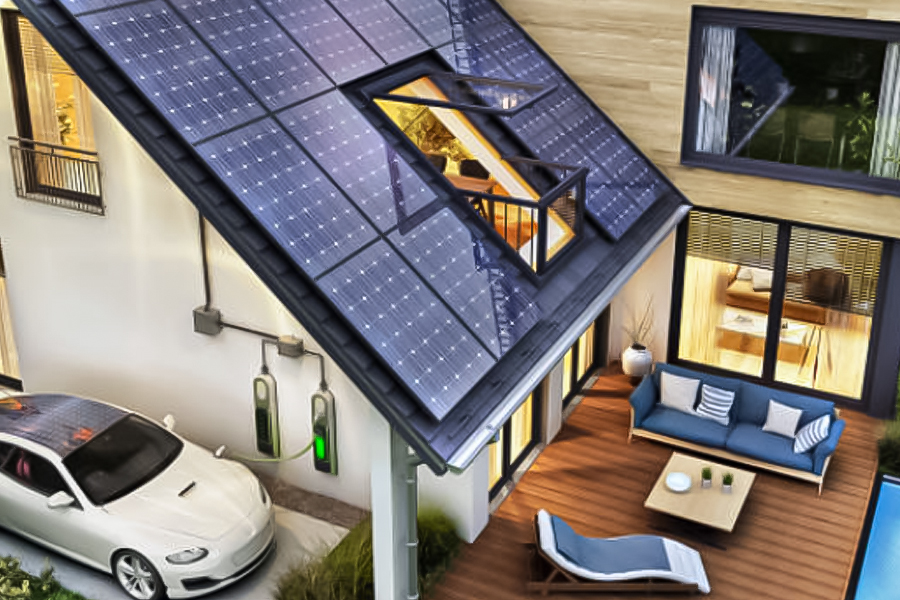
In areas where peak-valley electricity prices are implemented, home energy storage systems can be charged during low electricity price periods and discharged during peak periods, optimizing electricity costs through the "low-price electricity storage, high-price electricity use" model. For example, users can set the energy storage system to charge when the grid load is low and the electricity price is cheap at night, and the energy storage system will be powered during peak electricity consumption during the day, reducing dependence on high-priced city electricity. This mode is particularly suitable for families with large electricity consumption and obvious peak-valley price differences. Long-term use can significantly reduce electricity bills. At the same time, the energy storage system can also be used in conjunction with the solar photovoltaic system to store excess photovoltaic power during the day for use at night or on cloudy days, thereby improving the self-consumption capacity of solar energy and further reducing dependence on the power grid.
2. Emergency backup to ensure stable electricity consumption
In the face of power outages caused by extreme weather, equipment failures, etc., the home energy storage system can be used as an emergency power supply to provide continuous power support for key equipment such as refrigerators, lighting, and routers, avoiding the inconvenience and economic losses caused by power outages. For families who rely on medical equipment, such as ventilators and oxygen generators, the energy storage system is an important line of defense to ensure life safety. Its emergency power supply duration can be configured according to the battery capacity and household load requirements, ranging from a few hours to a whole day, giving users more time to deal with power outages. In addition, the automatic switching function of the energy storage system can be activated at the moment of power outage without manual intervention, ensuring the continuity and stability of electricity consumption.
3. New energy consumption promotes green electricity consumption
With the popularization of home solar photovoltaic systems, home energy storage systems have become the key to solving the problem of "abandoned electricity" of photovoltaic power. When there is sufficient sunlight, the electricity generated by photovoltaic modules is used by the family first, and the excess is stored in the energy storage battery; when there is insufficient sunlight or at night, the energy storage system releases electricity to achieve a closed loop of "self-generation and self-use, surplus electricity storage". This model not only improves the utilization efficiency of renewable energy and reduces carbon emissions, but also allows home users to transform from energy consumers to "energy producers + managers", which is in line with the global trend of green energy development. At the same time, through two-way interaction with the power grid, the home energy storage system can also transmit electricity to the grid when needed, realizing the optimal configuration and sharing of energy.
Technical principles and key components of home energy storage systems
1. Battery technology: the "heart" of the energy storage system
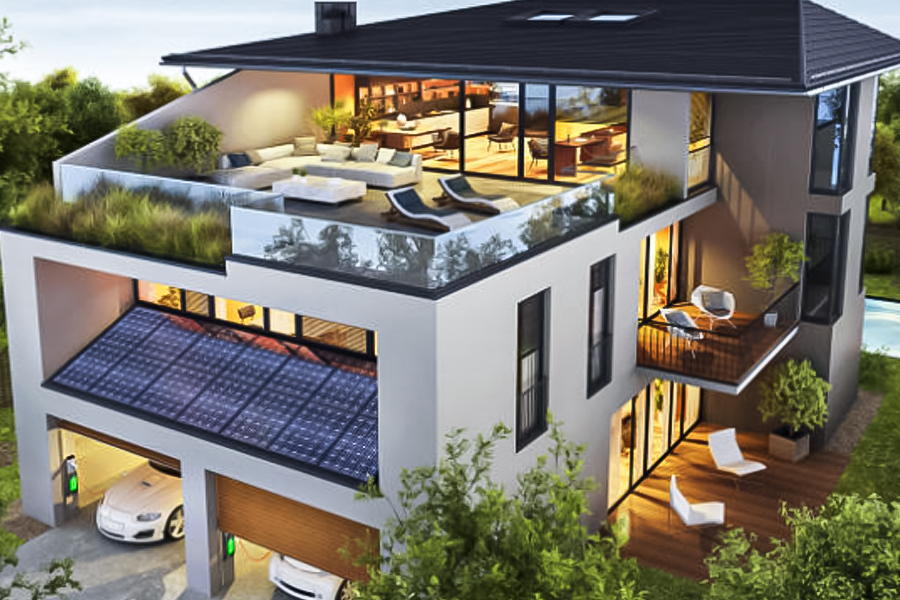
The battery pack is the core energy storage unit of the home energy storage system. The current mainstream technologies include lead-acid batteries, lithium-ion batteries and lithium iron phosphate batteries. Lead-acid batteries have low costs, but low energy density and short life, and are gradually being eliminated by the market; lithium-ion batteries have high energy density and long cycle life, but there are safety risks and need to be equipped with a complete battery management system (BMS); lithium iron phosphate batteries have both safety and long life advantages, becoming the first choice for household energy storage, with a cycle number of more than 3,000 times and a service life of more than 10 years. The selection of battery capacity needs to be combined with factors such as the average daily household electricity consumption, peak electricity demand, and whether it is equipped with a photovoltaic system. An average household can choose a storage capacity of 5-20kWh.
2. Energy Management System (EMS): The "Brain" of Intelligent Scheduling
EMS is responsible for monitoring the operating status of the energy storage system and coordinating the energy flow between batteries, photovoltaics, and the power grid. It collects data such as voltage, current, and temperature in real time, and intelligently determines the charging timing, discharge strategy, and interaction mode with the power grid to ensure that the system operates in a safe and efficient state. For example, when excess photovoltaic power is detected, EMS will automatically start the charging program; when the household power load increases or the power grid is out of power, it will immediately switch to the discharge mode. In addition, EMS also has fault diagnosis and protection functions, such as overcharge protection, over-discharge protection, overheating protection, etc., to ensure the stable operation of the system.
3. Inverter: The "bridge" of energy conversion
The function of the inverter is to convert the DC power stored in the battery into the AC power required for household electricity consumption, and achieve two-way compatibility with the power grid. Its efficiency directly affects the overall performance of the energy storage system. The conversion efficiency of high-efficiency inverters can reach more than 95%. At the same time, the inverter must also have functions such as grid synchronization and island protection to ensure that it is consistent with the grid frequency and voltage when connected to the grid, and can independently and stably supply power when off-grid. With the advancement of technology, inverters are developing in the direction of miniaturization and intelligence, integrating more functions, such as remote monitoring, fault warning, etc., to improve user experience.
Future prospects of home energy storage system
The home energy storage system is not only a practical tool to solve electricity costs and emergency protection, but also an important symbol of the transformation of energy consumption patterns. It allows every family to participate in energy management and achieve the unity of economy, stability and environmental protection of electricity through technical means. With the advancement of battery technology, the reduction of costs and the strengthening of policy support, the popularity of home energy storage systems will continue to increase, becoming an important part of smart homes and green life.
For users, the choice of home energy storage systems needs to be combined with their own electricity needs, budgets and long-term planning, and comprehensive considerations from multiple dimensions such as capacity configuration, safety, and brand services to ensure that the system can achieve maximum efficiency. With the improvement of industry standards and the maturity of the market, home energy storage systems will be integrated into daily life in a smarter and more reliable form, laying a solid foundation for building low-carbon families, smart communities and even energy Internet. In the wave of energy transformation, home energy storage systems are becoming a key link between the past and the future, leading us towards a new era of more sustainable electricity consumption.