

Under the background of global energy transformation, energy management in the industrial and commercial fields is facing the dual challenges of cost control and power supply stability. As the core equipment of the industrial and commercial energy storage system, the energy storage cabinet has effectively solved this problem by building an innovative model of "electric energy reservoir". Its internal integrated high-efficiency battery module can store electricity at a lower electricity price during the low load period of the power grid, and release electricity according to the preset strategy during the peak period, helping enterprises to achieve significant cost optimization.
As the "nerve center" of the energy storage cabinet, the intelligent control system adopts advanced energy management algorithms to monitor the power grid status, load demand and battery performance parameters in real time, and dynamically adjust the charging and discharging strategy. The system supports dual modes of remote monitoring and local autonomous control. Enterprises can view the energy storage status, energy consumption data and fault warning information in real time through a dedicated management platform to achieve digital upgrades in energy management.
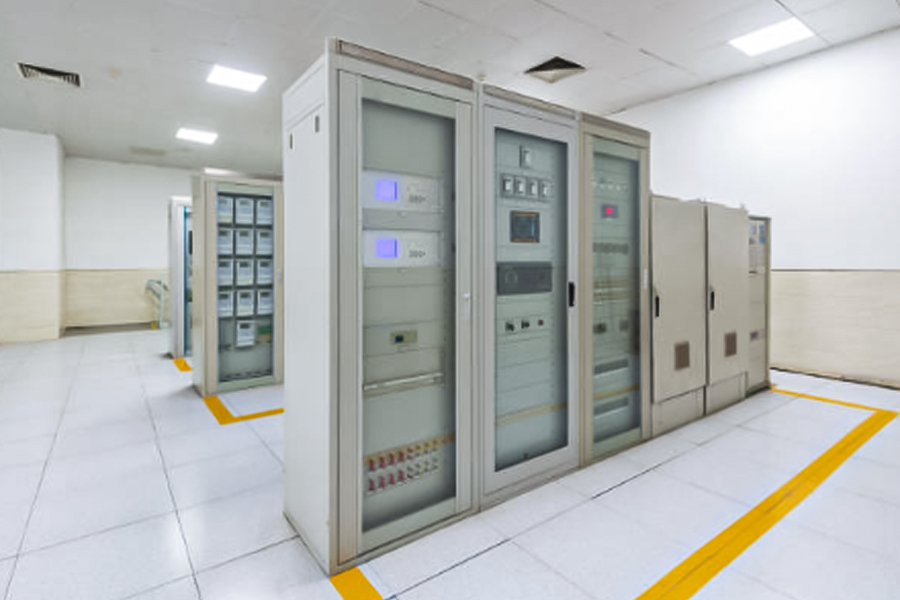
Multiple scenario applications and technology evolution paths
In industrial production scenarios, energy storage cabinets play multiple roles
● Backup power supply: The energy storage system configured on the production line can maintain the operation of key equipment when the power grid fails, providing sufficient time for emergency switching;
● Balancing load fluctuations: Precision electronic manufacturing companies use energy storage cabinets to smooth the instantaneous high power demand of equipment such as injection molding machines and coating lines, avoiding voltage fluctuations caused by sudden load changes;
● Emergency mobilization: Participate in demand response, dynamically adjust charging and discharging through power grid dispatching instructions, and obtain capacity compensation benefits.
With the increase in the penetration rate of renewable energy, energy storage cabinets are upgrading from single equipment to energy hubs. In the "photovoltaic + energy storage" integrated project, the energy storage system can match photovoltaic output and load demand in real time, and control the power abandonment rate below 5%. The 1MW energy storage cabinet deployed in a logistics park is linked with the rooftop photovoltaic system to achieve an efficient cycle of energy storage during the day and power supply at night, and the utilization rate of renewable energy is increased to 85%. The future technological evolution will show three major trends;
1. AI deep empowerment: predicting load curves and grid electricity price fluctuations through machine learning algorithms, realizing autonomous decision-making for energy dispatch, and expected to increase economic benefits by 15%-20%;
2. Hardware innovation: the application of solid-state batteries and liquid cooling technology will increase energy storage density by 50%, while reducing heat dissipation energy consumption;
3. System integration: seamlessly connect with microgrid management platforms and virtual power plant systems to build a regional smart energy network.
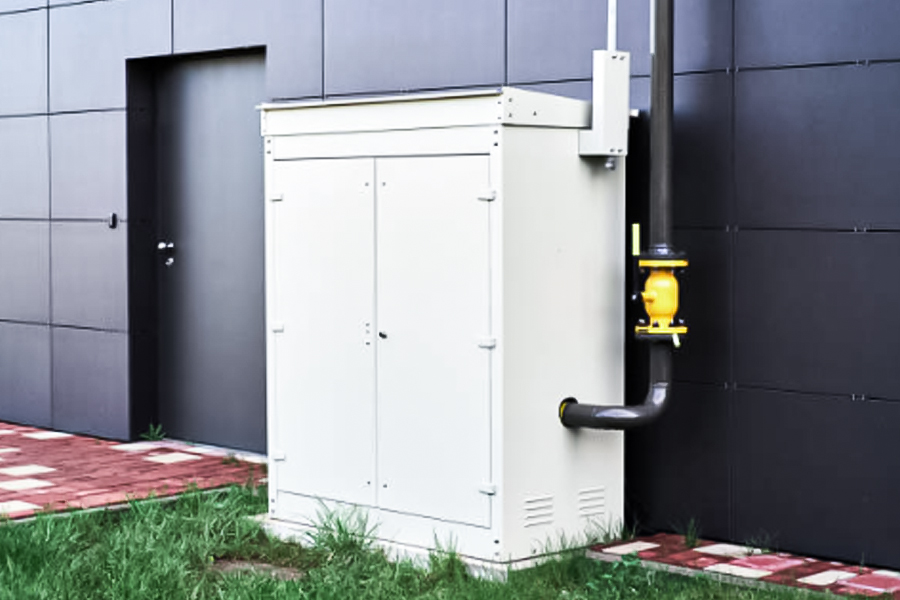
Building the core cornerstone of industrial and commercial energy transformation
As a key carrier of industrial and commercial energy transformation, the technical advantages of energy storage cabinets are reflected in three dimensions: in terms of structural design, through medical-grade sheet metal technology and modular architecture, the unity of reliability and flexibility is achieved; in terms of safety standards, it follows the IEC 62619 battery safety specification and GB/T 36276 energy storage system standards, and builds a full-chain safety system from battery cells to cabinets; in terms of scene adaptation, it provides a variety of models such as outdoor rainproof and indoor silent models to meet the special needs of different industries. A chemical company selected an explosion-proof energy storage cabinet, which has been operating stably in a flammable and explosive environment for more than 3 years, verifying its excellent environmental adaptability.
From technological innovation to scene implementation, energy storage cabinets are reshaping the industrial and commercial energy ecology with a cross-industry integration attitude. With the improvement of manufacturing technology and the improvement of intelligence level, this core equipment will not only be a storage carrier for electric energy, but also an energy hub for building green factories and smart businesses. Driven by the "dual carbon" goal, the large-scale application of energy storage cabinets is ushering in a golden development period. Its technological evolution and model innovation will surely inject continuous power into the energy transformation of the industrial and commercial fields.
Common Questions In-depth Analysis
Q1: What is the maintenance cost of the energy storage cabinet throughout its life cycle?
A1: The energy storage cabinet adopts a preventive maintenance strategy. The main maintenance contents include battery status detection (once every quarter), cooling system cleaning (once every six months) and electrical connection inspection (once a year). The modular design enables a single faulty module to be replaced independently, and the average annual maintenance cost is about 3%-5% of the equipment investment. Compared with traditional energy storage equipment, maintenance efficiency is improved by 40% and labor costs are significantly reduced.
Q2: What is the significance of medical sheet metal processing for extreme environment applications?
A2: In coastal factories with high salt fog or dusty mining scenes, ordinary sheet metal parts may rust and perforate in 2-3 years. The medical-grade sheet metal process uses high-precision bending, surface passivation and multi-layer coating to make the cabinet protection level reach IP55, effectively resisting the invasion of corrosive gases and dust, and extending the service life of the equipment to more than 15 years, which is particularly suitable for industrial scenes with strict reliability requirements.
Q3: How can the energy storage cabinet achieve efficient coupling with the photovoltaic system?
A3: Through the coordinated control of the bidirectional converter and the energy management system, the energy storage cabinet can track the maximum power point of the photovoltaic array in real time, store excess power in priority when there is sufficient sunlight, and automatically supplement the power supply when the load demand exceeds the photovoltaic output. The intelligent algorithm will adjust the energy storage strategy in advance according to weather forecasts and historical data to maximize the use of renewable energy.