

At a critical time of global energy transformation, photovoltaic power generation has become an important development direction in the energy field with its clean and renewable advantages. However, solar power generation is significantly affected by natural factors such as day and night alternation and weather changes, and the power generation shows obvious intermittent and fluctuating characteristics. For example, the peak power generation during sunny days is in sharp contrast to the zero output at night, and rainy weather will cause a sharp drop in overall power generation. This contradiction of mismatch between supply and demand seriously restricts the efficient use of solar energy.
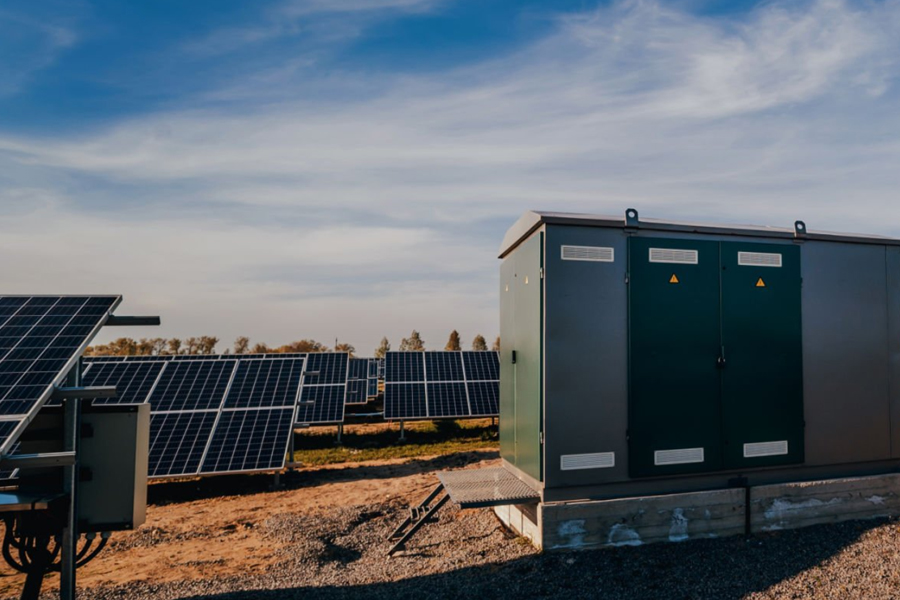
As the core component of the photovoltaic energy storage system, the energy storage cabinet is like an intelligent energy steward, shouldering the key mission of balancing power generation fluctuations and improving energy utilization. Its working principle is that when the photovoltaic components generate excess power during the day, the surplus electrical energy is converted into chemical energy and stored in the internal battery pack; and when night falls or encounters rainy weather, the photovoltaic system generates insufficient power, and then the stored electrical energy is released to provide a stable power supply for the load. This "peak shaving and valley filling" function effectively solves the intermittent pain point of solar power supply, allowing clean energy to be transformed from an unstable energy source that "relies on the weather" to a reliable energy source that can be dispatched on demand, laying a solid foundation for the large-scale application of solar energy.
Analysis of the deep coordination mechanism between energy storage cabinet and photovoltaic system
1. Intelligent charging and discharging strategy realizes smooth output of electric energy
The output power of photovoltaic power generation is like an undulating wave, which changes in real time due to factors such as light intensity and temperature. The energy storage cabinet uses a built-in intelligent control system to monitor the power generation of the photovoltaic system and the power demand of the load in real time, and dynamically adjusts the charging and discharging strategy. When the photovoltaic power generation is greater than the load demand, the system automatically starts the charging mode to charge the battery with the optimal charging current and voltage to ensure efficient storage of electric energy; when the power generation is insufficient, it quickly switches to the discharge mode to output electric energy stably according to the load demand, so that the output power curve of the entire photovoltaic system becomes smooth and stable, just like turning the undulating waves into a gentle stream, providing high-quality electricity for the power grid or load.
2. Precision battery management system ensures efficient operation of the battery
The battery management system (BMS) is the "brain" of the energy storage cabinet, which monitors and manages the battery pack in an all-round way. The system can accurately collect key parameters such as voltage, temperature, charging and discharging current of each battery, and evaluate the battery status (such as state of charge SOC, state of health SOH, etc.) in real time. Through advanced algorithms, BMS can promptly detect abnormal conditions of the battery, such as overcharging, over-discharging, abnormal temperature, etc., and take corresponding protective measures to avoid battery damage and extend the battery life. For example, when the temperature of a battery is too high, BMS will automatically adjust the charging current and start the cooling fan to ensure that the battery operates within a safe temperature range. This precise management is like equipping the battery with a caring "health steward", ensuring the efficient and safe operation of the battery pack.
3. Excellent structural design to cope with harsh outdoor environments
Energy storage cabinets are usually installed in outdoor environments and face the test of harsh conditions such as high temperature, high humidity, dust, and ultraviolet radiation. In order to ensure the long-term and stable operation of the equipment, its structural design draws on the precision manufacturing concept of medical sheet metal parts. High-strength metal materials are used as the cabinet frame, and after fine bending, welding, grinding and other processes, a sturdy and durable structure is formed. The interior of the cabinet adopts a reasonable layout design to ensure good heat dissipation and avoid local overheating; at the same time, it has excellent sealing performance, effectively blocking dust and rain from entering the cabinet and preventing electrical components from being corroded. In terms of surface treatment, the weather-resistant coating technology commonly used in inkjet printer chassis is introduced. Through multiple coating processes, a dense protective layer is formed on the cabinet surface, which can effectively resist ultraviolet radiation, prevent paint aging and fading, and resist the erosion of wind, sand and rain, so that the energy storage cabinet can maintain good performance for a long time in the outdoor environment, just like wearing a layer of solid "protective armor".
Technological innovation drives energy storage cabinets to a new height of sustainable development
1. Battery technology upgrade improves performance and safety
In the field of batteries, the core component of energy storage cabinets, technological innovation has made significant progress. Lithium iron phosphate batteries have gradually become the mainstream choice of energy storage cabinets due to their excellent performance advantages. Compared with traditional lead-acid batteries, lithium iron phosphate batteries have higher energy density and can store more electricity at the same volume or weight, thereby reducing the volume and weight of energy storage cabinets and improving space utilization; at the same time, it has a longer cycle life, and the number of charge and discharge times can reach thousands of times, which greatly reduces the replacement frequency and use cost of batteries. More importantly, the safety of lithium iron phosphate batteries has been greatly improved. They have good thermal stability and are not prone to accidents such as fire and explosion, which provides a strong guarantee for the safe operation of energy storage cabinets. This battery technology upgrade is like installing a more powerful and reliable "heart" for the energy storage cabinet, which greatly improves its performance.
2. Bidirectional conversion technology gives energy storage cabinets new functions
The breakthrough of bidirectional conversion technology is another important milestone in the development of energy storage cabinet technology. Traditional energy storage cabinets mainly realize the storage and release of electric energy, while the application of bidirectional converters enables energy storage cabinets to have the ability to interact with the power grid in both directions. During the low load period of the power grid, the energy storage cabinet can absorb electric energy from the power grid for storage, which plays a role in peak load; during the peak load period, the stored electric energy is released back to the power grid to relieve the power supply pressure of the power grid and realize the valley filling function. In addition, when the photovoltaic system generates excess power, the energy storage cabinet can transmit the excess electric energy to the power grid through the bidirectional converter to provide clean energy for the power grid; and when the power grid fails or the power outage occurs, the energy storage cabinet can serve as an independent power supply to power the load, improving the reliability of power supply. This two-way interactive capability enables energy storage cabinets to transform from simple "energy storage devices" to "flexible adjustment units" of power grids, playing an increasingly important role in the construction of smart grids.
3. Full life cycle carbon footprint tracking practices green manufacturing concepts
In the context of global advocacy of low-carbon development, energy storage cabinet manufacturers actively practice the concept of sustainable development, learn from the production standards of medical equipment, and introduce full life cycle carbon footprint tracking technology. Starting from the procurement of raw materials, carbon emissions are calculated for each raw material acquisition process, including ore mining, processing and transportation; in the production and manufacturing process, the production process is optimized, energy-saving equipment and green energy are used to reduce carbon emissions in the production process; in the product transportation link, the logistics route is reasonably planned and low-carbon transportation methods are adopted; in the use stage, by improving the efficiency and life of the energy storage cabinet, energy consumption and waste generation are reduced; in the decommissioning and recycling stage, a complete recycling system is established, and batteries and other components are treated in an environmentally friendly manner to achieve resource recycling. Through full life cycle carbon footprint tracking, companies can clearly understand the carbon emissions of products in each link, so as to take effective emission reduction measures and contribute to the construction of a zero-carbon energy network.
Energy storage cabinets lead the transformation of photovoltaic systems from supplementary energy to main energy source
With the continuous growth of global demand for clean energy and the in-depth advancement of energy transformation, energy storage cabinets, as the core hub of photovoltaic energy storage systems, are triggering a revolution in the energy field through technological progress. In terms of energy management, through intelligent charging and discharging strategies and efficient battery management systems, precise scheduling and efficient utilization of solar energy are achieved, which greatly improves the power supply stability of photovoltaic systems; in terms of environmental adaptability, precise structural design and advanced surface treatment technology ensure the long-term reliable operation of equipment in various harsh environments, and expand the application scenarios of photovoltaic systems; in terms of sustainable development, the upgrade of battery technology, the application of bidirectional conversion technology and the tracking of carbon footprint throughout the life cycle promote the development of energy storage cabinets towards higher energy density, longer cycle life and more environmental protection.
These breakthroughs not only enable photovoltaic systems to gradually transform from "supplementary energy" in the past to "main energy" comparable to traditional energy, but also play a solid foundation role in the process of building a zero-carbon energy network. It can be foreseen that with the continuous advancement of technology and the further reduction of costs, energy storage cabinets will be widely used in more fields and contribute more to the realization of global carbon neutrality goals.
FAQ
Q1: Is the photovoltaic energy storage cabinet suitable for home use?
A1: With the continuous development of technology, miniaturized energy storage cabinet products for home use have been launched on the market. These small energy storage cabinets are small in size, easy to install, and simple to operate. They can meet the daily electricity needs of households, especially provide emergency power supply during power outages. However, from an economic point of view, due to the large scale of electricity consumption in industrial and commercial scenarios, energy storage cabinets can more fully play their role of "peak shaving and valley filling", reduce the electricity costs of enterprises, and improve energy utilization efficiency. Therefore, their application in the industrial and commercial fields can better reflect their economic value. For home users, they can consider whether to install photovoltaic energy storage cabinets based on their own electricity needs, budgets, and requirements for power supply stability.
Q2: What is the relationship between inkjet printer chassis technology and energy storage cabinets?
A2: In the long-term research and development and application process, the inkjet printer chassis has accumulated rich experience in dust and water resistance, identification management, etc. In terms of dust and water resistance, the inkjet printer chassis uses advanced sealing design and materials, which can effectively prevent dust and water vapor from entering the chassis and protect the normal operation of internal electronic components. This design concept and technology have been applied to the structural design of the energy storage cabinet, improving the protection performance of the energy storage cabinet in harsh outdoor environments. In terms of identification management, the clear identification on the inkjet printer chassis helps the operation and maintenance of the equipment. The energy storage cabinet draws on this experience and sets clear identification on the cabinet body, such as terminal identification, operating instruction identification, etc., which provides a reference for the standardization of the operation and maintenance of the energy storage cabinet, facilitates the installation, commissioning and maintenance of the staff, improves the operation and maintenance efficiency, and reduces the operation and maintenance cost.