

This article provides a detailed overview of battery pack production, explaining the key processes, components, technologies, challenges, and applications. It is designed to help engineers, industry professionals, and enthusiasts understand how battery packs are made and why proper manufacturing is essential for modern energy solutions.
What Is a Battery Pack?
A battery pack is a collection of individual battery cells assembled together into a single unit to provide higher voltage, capacity, and energy output than a single cell can deliver. Battery packs are used in a variety of applications:
-
Electric vehicles (EVs): powering motors and onboard systems
-
Renewable energy storage systems: storing electricity from solar panels or wind turbines
-
Portable electronics: powering laptops, tablets, and mobile devices
-
Industrial equipment: providing backup power and supporting operations
Battery packs are more than just a collection of cells; they include additional components like battery management systems (BMS), cooling systems, safety mechanisms, and connectors, all of which ensure that the pack operates safely and efficiently.
Key Components of a Battery Pack
Battery Cells
The core of any battery pack is its cells, which store and release electrical energy. Cells come in various chemistries:
-
Lithium-ion (Li-ion): the most common choice for EVs and energy storage due to high energy density, long cycle life, and efficiency.
-
Nickel-Metal Hydride (NiMH): used in some hybrid vehicles and industrial applications.
-
Lead-acid: older technology, typically used in backup power applications.
-
Solid-state batteries: emerging technology with enhanced safety and energy density.
Battery cells are usually organized into modules, and several modules are combined to form a complete pack.

Battery Management System (BMS)
The BMS monitors and manages the health, voltage, temperature, and state of charge of each cell to ensure safety and maximize lifespan. It can prevent overcharging, overdischarging, and overheating, which are critical for preventing battery failures or hazards.
Cooling and Thermal Management
Thermal management systems maintain optimal operating temperatures. Efficient heat dissipation prevents thermal runaway and improves battery performance. Cooling systems can be air-cooled, liquid-cooled, or phase-change systems, depending on the application.
Structural Components
Battery packs include cases, modules, connectors, fuses, and insulating materials to protect cells, prevent short circuits, and provide mechanical stability.
The Battery Pack Production Process
Cell Selection and Testing
Before assembly, cells are tested for quality, capacity, and consistency. High-quality cells ensure uniform performance across the battery pack. Cells with slight variations can lead to imbalances, reducing efficiency and shortening lifespan.
Module Assembly
Cells are grouped into modules, which are sub-pack units containing multiple cells. The assembly process may involve:
-
Spot welding or ultrasonic welding: connecting cells electrically
-
Stacking or folding cells: depending on the design
-
Insulating materials: added between cells to prevent short circuits
Modules are often designed to be replaceable to facilitate maintenance and scalability.
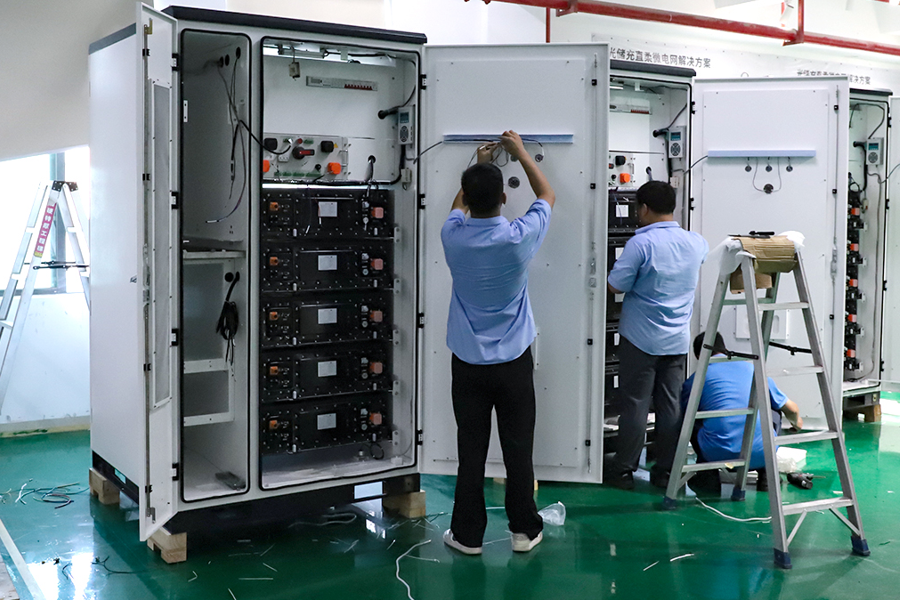
Pack Assembly
Modules are then combined into a battery pack, and additional components are integrated:
-
Battery Management System (BMS) installation
-
Cooling systems integration
-
Electrical connectors for output
-
Enclosures for protection
During assembly, precision and care are required to ensure electrical safety and mechanical stability.
Quality Control and Testing
After assembly, battery packs undergo rigorous testing, including:
-
Voltage and current tests
-
Thermal performance assessment
-
Short circuit and insulation testing
-
Cycle testing to ensure long-term performance
Quality control ensures that each pack meets safety standards and performance specifications.
Packaging and Logistics
Finished battery packs are packaged carefully to prevent damage during transport. Handling and storage follow strict safety guidelines due to the flammability and energy density of lithium-based cells.
Safety Considerations in Battery Pack Production
Battery packs, especially lithium-ion, carry inherent risks if improperly handled. Key safety measures include:
-
Overcharge protection: preventing excessive voltage in any cell
-
Thermal management: preventing overheating or thermal runaway
-
Short-circuit protection: using fuses and insulation materials
-
Fire suppression systems: in manufacturing and storage facilities
Proper safety protocols during production, transport, and installation are essential to prevent accidents and ensure reliability.
Applications of Battery Packs
Electric Vehicles
Battery packs are critical for EV performance, determining driving range, efficiency, and reliability. High-capacity packs provide longer range, while efficient thermal management ensures safe operation under various conditions.
Renewable Energy Storage
Battery packs store excess energy from solar panels or wind turbines, providing backup power and load balancing. This enables businesses and households to maximize renewable energy utilization and reduce reliance on fossil fuels.
Portable Electronics
Battery packs power laptops, tablets, cameras, and other electronic devices. Here, compact design, lightweight materials, and safety features are prioritized to enhance user convenience and prevent hazards.
Industrial and Grid-Scale Applications
Large battery packs support industrial energy needs, grid stabilization, and peak shaving. Containerized battery packs, in particular, are becoming popular for modular, scalable, and transportable energy storage solutions.
Advancements in Battery Pack Production
Automation and Robotics
Modern battery pack production increasingly uses automation and robotics to improve efficiency, reduce human error, and enhance safety. Automated welding, assembly, and inspection systems ensure high precision and consistency.
Improved Battery Chemistries
Advances in lithium-ion, solid-state, and hybrid chemistries are enhancing energy density, cycle life, and safety. These innovations allow for longer-lasting, lighter, and safer battery packs.
Modular and Scalable Designs
Modular battery pack designs enable flexible configurations for EVs, renewable storage, and industrial applications. Packs can be scaled up or replaced in parts, reducing maintenance costs and downtime.
Challenges in Battery Pack Production
Quality Control
Variations in cell quality can lead to performance imbalances, reducing pack efficiency. Ensuring uniform quality requires rigorous testing at every production stage.
Thermal Management
As battery energy density increases, managing heat becomes more complex. Ineffective thermal management can lead to overheating, degradation, or safety hazards.
Cost Management
High-quality battery pack production involves expensive materials, skilled labor, and advanced manufacturing processes. Balancing cost, performance, and safety is a constant challenge for manufacturers.
Supply Chain Considerations
Securing reliable sources of lithium, cobalt, and other critical materials is essential. Supply chain disruptions can affect production timelines and costs.
Future Trends in Battery Pack Production
Solid-State Batteries
Solid-state batteries promise higher energy density, faster charging, and improved safety. They are expected to play a major role in next-generation EVs and energy storage systems.
AI and Smart Production
Artificial intelligence and machine learning are being applied to battery pack production for predictive quality control, process optimization, and safety monitoring.
Recycling and Sustainability
Sustainable production and recycling of battery packs are increasingly important. Efficient recycling processes for lithium-ion batteries reduce environmental impact and recover valuable materials.
FAQs
1. What is the difference between a battery cell and a battery pack?
A battery cell is a single electrochemical unit that stores energy, while a battery pack combines multiple cells with additional systems like BMS and cooling to provide higher voltage, capacity, and safety.
2. Why is thermal management important in battery packs?
Proper thermal management prevents overheating, ensures optimal performance, extends battery lifespan, and reduces the risk of fire or thermal runaway.
3. What industries use battery packs?
Battery packs are widely used in electric vehicles, renewable energy storage, portable electronics, industrial machinery, and grid-scale applications.
4. How long does a typical lithium-ion battery pack last?
Depending on usage and maintenance, a lithium-ion battery pack typically lasts 8–15 years, or 1,000–3,000 charge cycles.
5. Can battery packs be recycled?
Yes, lithium-ion battery packs can be recycled to recover materials like lithium, cobalt, and nickel, reducing environmental impact and supporting sustainability.