

Industrial and commercial energy storage systems play an increasingly important role in modern energy management, and the stable operation of their core components, batteries, especially the heat dissipation effect, directly determines the safety and overall service life of the system. Faced with different heat dissipation requirements, liquid cooling and air cooling technologies have become the current mainstream technical routes. The core goal of this article is to deeply analyze the principles and characteristics of these two heat dissipation technologies, especially how they affect the key indicators of energy storage systems: safety and service life. We will compare their performance in terms of heat dissipation efficiency, long-term operation stability, maintenance complexity, etc., aiming to provide companies with a clear and objective technical route comparison reference when planning or upgrading energy storage solutions, and help make decisions that are more in line with actual needs and safety standards.
Overview of liquid-cooled and air-cooled energy storage
In industrial and commercial energy storage systems, liquid cooling and air cooling are two common heat dissipation technology routes, which help equipment maintain a suitable temperature in different ways. Liquid cooling technology uses liquid circulation to absorb heat, such as water or coolant flowing through the battery module to achieve efficient cooling. Air cooling technology relies on air flow to remove heat through fans or natural ventilation, and the structure is relatively simple. These two methods are critical in industrial and commercial energy storage applications because they are directly related to the safety and service life of the system. Good heat dissipation can prevent the risk of fire caused by overheating of the battery, while a stable temperature environment can help extend the life of the battery and avoid premature aging. As the scale of energy storage expands, choosing the right heat dissipation method becomes a key starting point for optimizing the solution.
Analysis of the impact of heat dissipation safety
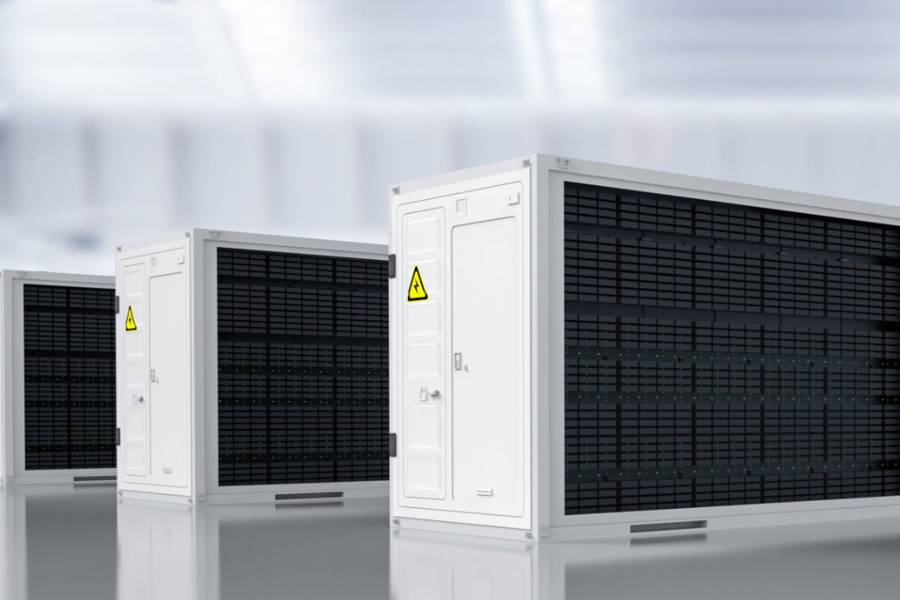
Heat dissipation technology directly affects safety performance in industrial and commercial energy storage systems. Liquid cooling solutions use liquid to efficiently transfer heat and achieve uniform cooling, which can avoid local overheating of the battery and reduce the risk of fire. Air cooling systems rely on air flow to dissipate heat, but in high temperature or poorly ventilated environments, the heat dissipation efficiency decreases, which may lead to hot spots and increase safety hazards. For example, industry test data shows that liquid cooling can control temperature fluctuations within ±3°C, significantly improving operational stability. Enterprises need to consider site conditions when choosing to ensure that the heat dissipation method matches safety requirements.
Key comparison of service life
When considering the long-term value of industrial and commercial energy storage systems, the choice of heat dissipation technology plays a decisive role in the life of the equipment. Liquid cooling systems have significant advantages due to their precise temperature control capabilities. It can evenly and stably maintain the core temperature of the battery in the optimal working range, effectively avoiding high temperature and local overheating, which greatly slows down the degradation rate of the internal materials of the battery. Actual operating data shows that under the same working conditions, the battery life of the energy storage system using liquid cooling is usually about 25% longer than that of the air cooling system. Although the initial cost of the air cooling system is lower, its heat dissipation efficiency is greatly affected by the ambient temperature. In hot weather or high-load operation, the battery may experience more drastic temperature fluctuations. This repeated thermal shock will accelerate the aging of the battery, shorten its overall service life, and the frequency of maintenance and replacement of parts may also increase accordingly, increasing the potential maintenance cost by 15-20% in the long run. Therefore, for projects that pursue longer operating years and lower life cycle costs, liquid cooling technology provides a more reliable guarantee.
In-depth evaluation of technical advantages and disadvantages
Liquid cooling technology performs better in heat dissipation efficiency and can control battery temperature more accurately, especially under high-power operation or high ambient temperature conditions. This helps to reduce the temperature difference between batteries and improve the stability and consistency of the overall system. It is also usually quieter in operation. However, the structure of the liquid cooling system is relatively complex, and the initial installation cost and subsequent maintenance cost are usually higher than those of the air cooling system. If the coolant leaks, it may also bring additional safety risks and maintenance challenges. In contrast, the structure of air cooling technology is much simpler, and it is easier to install and maintain, and the cost is lower. It is particularly suitable for places with ample space and good ventilation. However, air cooling relies on air flow, and its heat dissipation capacity is relatively limited. The effect will be discounted in high temperature or closed space, which can easily lead to uneven battery temperature distribution, and the fan will generate noise when running. Therefore, when choosing, it is necessary to carefully weigh the heat dissipation performance, cost investment, maintenance convenience, and specific requirements for the installation environment.
Comprehensive discussion of decision factors
When choosing a heat dissipation technology route for industrial and commercial energy storage systems, the choice between liquid cooling and air cooling is not a simple dichotomy, but requires a comprehensive weighing of multiple key factors. First of all, the initial investment cost needs to be given priority. The structure of the air cooling system is relatively simple, and the equipment purchase and installation costs are usually low; while the liquid cooling system has a higher initial investment, but its long-term operating costs may be reduced due to higher heat dissipation efficiency. Secondly, the operating environment is crucial: in places with small spaces, dusty environments, or where quiet operation is required, liquid cooling is often more advantageous due to its closed design and low noise; but in environments with ample space and good ventilation, the simplicity and maintenance convenience of air cooling may be more popular. Finally, the company's own maintenance capabilities should not be ignored. Air cooling maintenance is relatively intuitive, while liquid cooling requires more professional technical support. Therefore, decision makers must conduct a comprehensive assessment based on the project budget, specific installation environment, and long-term expectations for safety and service life.
Enterprise Optimization Solution Recommendations
After comprehensively considering the decision factors of liquid cooling and air cooling, companies should prioritize the evaluation of the safety requirements and service life goals of the energy storage system to optimize the solution decision. If industrial and commercial energy storage projects have extremely high requirements for heat dissipation safety, such as in high temperatures or closed environments, liquid cooling technology can provide more stable temperature control and reduce fire risks. On the contrary, for cost-sensitive scenarios where service life needs to be balanced, air cooling systems are simple to maintain and have low initial investment, making them suitable for companies with limited budgets. It is recommended that enterprises customize the selection of technical routes based on the scale of energy storage, environmental conditions and operating frequency, such as using liquid cooling in large facilities to improve overall reliability, or using air cooling in small and medium-sized projects to optimize cost-effectiveness.
In the selection of heat dissipation technology for industrial and commercial energy storage systems, liquid cooling and air cooling routes have their own characteristics, which directly affect the long-term performance of safety and service life. Liquid cooling solutions can significantly reduce the risk of battery overheating and improve overall safety through efficient liquid circulation heat dissipation, while extending the service life of equipment to more than 10 years. In contrast, air cooling technology is known for its low cost, but its heat dissipation efficiency is low, which may cause safety hazards or shorten life. When making decisions, enterprises need to combine specific application scenarios, budgets and maintenance needs, and give priority to the balance between safety and life. In the future, with technological innovation, intelligent heat dissipation solutions are expected to combine the advantages of both and provide enterprises with more optimized energy storage solutions.