

Against the backdrop of global energy transition and green development, residential energy storage systems are becoming an important fulcrum for household energy management. It is no longer merely a backup power source, but a new chapter in modern household energy usage that integrates energy production, storage and intelligent distribution, enabling families to have an efficient, independent and environmentally friendly way.
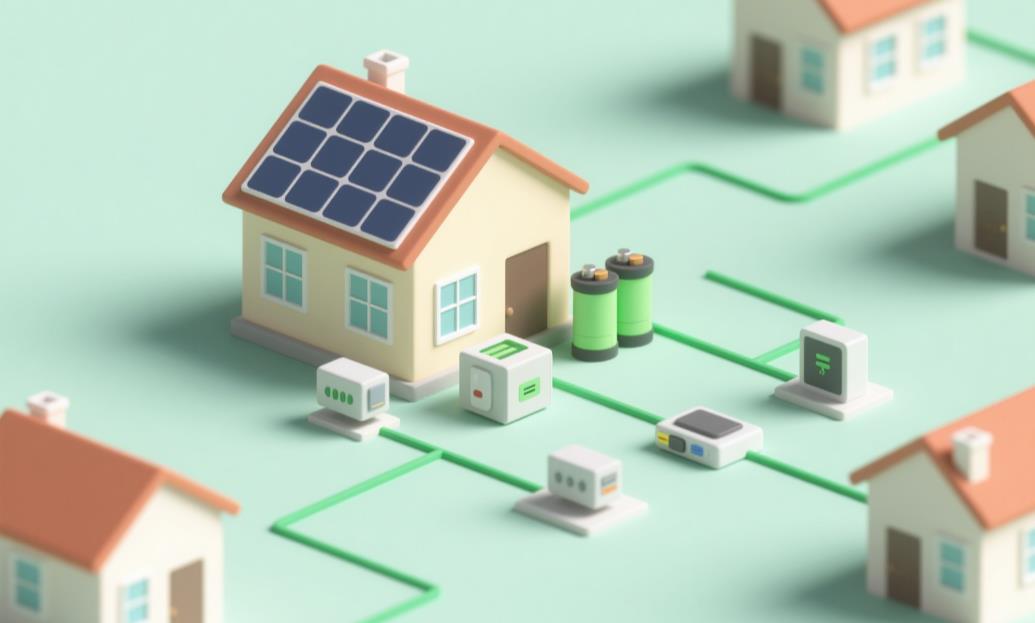
Residential energy storage systems: The cornerstone of energy independence
The core of a residential energy storage system lies in the coordinated operation of its key components, which together form an efficient energy circulation system:
Solar panels: These "energy collectors" are responsible for directly converting sunlight into direct current electrical energy. They are usually installed on rooftops and are the main source of clean electricity for households, providing a continuous supply of green energy for the entire system.
Energy storage inverter: As the "brain" and "hub" of the system, the inverter plays a crucial role. It not only can convert the direct current generated by solar panels into the alternating current needed by household appliances, but also can flexibly manage the switching between public utilities, solar power generation and battery charging and discharging according to real-time needs. Whether prioritizing solar energy, rechargeable batteries, automatically switching to battery power during grid outages, or even feeding back excess power to the grid in some cases, inverters are precisely controlled.
Energy storage battery pack: This is a systematic "energy management warehouse", and usually a high-performance lithium-ion power battery can be adopted. It is responsible for storing the excess electricity generated by the solar panels for emergencies, such as providing power to the household at night, on rainy days or when the mains power is cut off. The size of the battery market capacity does not directly affect the energy self-sufficiency, learning ability and backup time of a household.
Battery Management System (BMS) : As the "guardian" of the battery pack, BMS monitors the battery's voltage, current, temperature and health status in real time. It can optimize the charging and discharging process of the battery to prevent overcharging and overdischarging. Meanwhile, it can also balance the charges of each battery pack in the battery pack, thereby extending the service life of the battery and ensuring the safe and efficient operation of the system.
These components together form a complete closed loop of "collection - conversion - storage - use", laying a solid foundation for household energy management and enabling families to use renewable energy more effectively.
Residential energy storage system: Building a smart energy network for the entire house
Residential energy storage systems are no longer confined to a single power supply function, but can be seamlessly integrated into various energy consumption scenarios in the home, building an intelligent energy network covering all scenarios.
Give priority to clean energy: When there is abundant sunlight, solar systems will be given priority as the power supply method for daily household electricity (such as lighting and electrical appliances).
Energy management optimizes resource allocation: The remaining solar energy storage will be guided to the energy storage battery system for data storage, or directly used to drive the development of other high-energy-consuming equipment, such as providing power for heat pumps to regulate indoor environmental temperature, or supplying power to electric vehicle charging piles, achieving efficient allocation of energy resources.
Power supply during night and peak hours: When solar energy is insufficient at night, in stormy or rainy weather, the energy storage battery will automatically take over the power supply, reducing the reliance on traditional high-priced municipal electricity.
Emergency power outage: In the event of an unexpected power outage, the residential energy storage system can quickly switch to backup mode, using the energy stored in the battery to supply power to critical loads such as refrigerators, lighting, and communication equipment, ensuring that family life is not affected. Some high-end systems can even be connected to generators and automatically start when the battery runs out, providing longer emergency protection.
This multi-functional and complementary model has greatly enhanced the energy self-sufficiency capacity of households and their guarantee in response to emergencies, making household energy usage more flexible, autonomous and efficient.

Empower sustainable living and lead the new future of household energy
Residential energy storage systems are a key tool for promoting sustainable lifestyles in families and an important force in comprehensively reshaping the home energy ecosystem driven by technological innovation. By maximizing the utilization and storage of solar energy, it significantly reduces households' reliance on traditional fossil fuel power generation. At the same time, it shifts from hardware collaboration to scene integration, intelligent management, and green practices, comprehensively reconfiguring the household energy model and deeply integrating the green concept into our daily lives. Meanwhile, residential energy storage systems serve as a bridge connecting families and a sustainable future.
With the advancement of technology and the increasing popularity of the market, residential energy storage systems will be integrated into more households, leading the trend of green, efficient and independent energy use, injecting new "household electricity" into the global energy revolution, and bringing "zero-carbon" living from concept to reality.