

Amid the escalating global demand for energy efficiency and sustainable development, integrated storage cabinets have become vital devices for optimizing energy storage and management in industrial and commercial sectors. These integrated energy storage solutions not only streamline the complexities of traditional energy systems but also enhance operational flexibility and economic viability.


Core Components and Technologies:
The integrated storage cabinet typically comprises the following main components:
Cabinet: The structural infrastructure that provides physical protection and an aesthetic appearance.
Liquid Cooling Units: They regulate internal temperatures to ensure effective cooling of batteries and other sensitive components.
PCS Energy Storage Converter: This converter transforms the direct current stored by the batteries into alternating current for use in power grids or applications.
Battery Pack: The heart of the energy storage system, often utilizing lithium-ion or lead-acid batteries.
EMS (Energy Management System): The system's intelligent brain, in charge of monitoring, analyzing, and optimally controlling the energy flow.
Storage High-Pressure Box: Safely contains high-voltage components to protect the system from electrical breakdowns or short circuits.
Firefighting System: Includes an automatic fire extinguishing device for a rapid response to emergencies.
Safety Assistance Systems: Incorporate smoke, temperature, and humidity sensors to monitor environmental conditions in real time.
Functional Characteristics of the Energy Management System (EMS):
The EMS is the most critical component of the integrated storage cabinet, ensuring the system's efficient operation through functions like:
Panoramic Monitoring: Real-time surveillance of all system components, including battery status, energy consumption, and output.
Condition Analysis: Evaluation of collected data to assess system performance and foresee potential issues.
Optimal Control: Adjustment of system parameters to enhance performance, such as modifying battery charge and discharge rates or altering operating modes.
Fault Diagnosis and Prevention: Identification and alerting of possible system failures to minimize maintenance costs and downtime.
Data Logging and Reporting: Automated recording of operational data and report generation for straightforward historical tracking and strategic planning.
Integrated storage cabinets are extensively applied across various scenarios, including:
Industrial Use: To supply emergency backup power and ensure a stable production line power supply.
Commercial Facilities: To refine energy usage and curtail electricity costs.
Renewable Energy Projects: Such as harnessing solar or wind energy to amplify clean energy utilization.
Microgrids: To bolster energy autonomy and system stability.
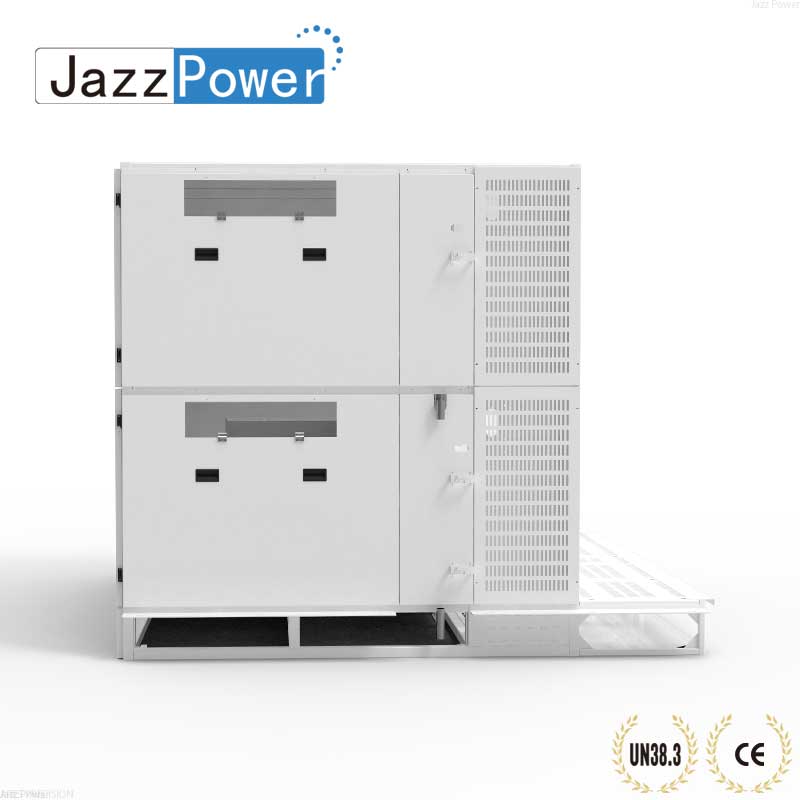
With the development of technology and the growth of market demand, integrated storage cabinets provide efficient and reliable energy solutions for industrial and commercial users. The integrated design and intelligent management systems of these devices make them play an important role in energy management, especially in promoting the use of renewable energy and improving energy efficiency. In this field, the subsidiary of Jazz power has helped the development of integrated energy storage cabinets and promoted the progress of the industry through its technology and product support.
TAG: Commercial ESS, Residential ESS, EV Chargers